
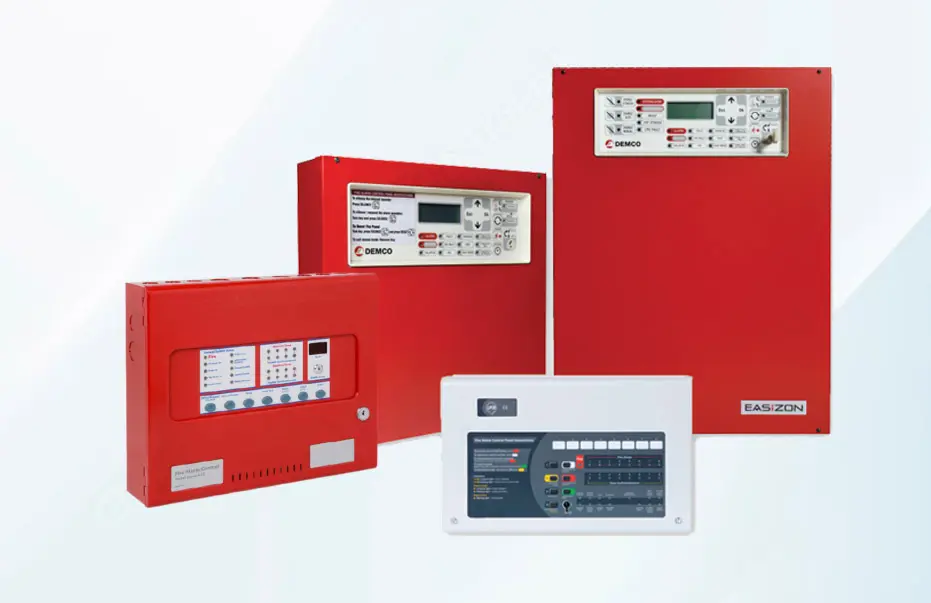
A conventional fire alarm system is a zone based fire detection and notification system, in which the initiating devices are connected together in circuits known as zones. When a device is activated, the fire alarm control panel (FACP) detects the alerting zone but cannot locate the specific location. This system is most appropriate for small to medium sized constructions where simplicity, cost efficiency and simple installation are the key factors.
The Main Components of a Conventional Fire Alarm System
1) Fire alarm control panel (FACP)
The fire alarm control panel acts as the heart of the fire alarm system, and it manages all the initiating device circuits (IDCs), notification appliance circuits (NACs) and auxiliary outputs. The zone circuit is usually radial and open and short-circuit is supervised with a limit resistor at the end. With the circuit under normal operating conditions, the panel constantly checks the integrity of the circuit. The activation of a detector or a manual call point changes the state of the electrical circuit and normally it creates a short across the zone, which the panel views as an alarm event. The panel itself then triggers sounders and strobes through the NAC and toggles programmable relays to communicate with other building systems (e.g. HVAC shutdown, elevator recall, or fire suppression release, etc.) where necessary. The system has 24 VDC operation that is fed by a primary AC supply that is complemented by internal charger and standby batteries according to the existing fire codes.
2) Initiating Devices
Smoke Detectors
Conventional smoke detectors are majorly photoelectric (optical). They sense the presence of particulate matter in a sensing chamber and on activation, change the zone circuit to trigger an alarm. These are suitable detectors that are installed in offices, corridors and meeting rooms, among other similar clean areas. Detector spacing follows parameters specified in codes and considers the aspects of the ceiling height.
Heat Detectors
Where the smoke detectors will cause false alarms because of dust, steam or fumes, heat detectors can be used. They come either in fixed-temperature (e.g. 57 -1 C or 70 -1 C) or rate-of-rise form. Fixed-temperature sensors will activate when a set-point temperature is attained and rate-of-rise sensors to quick rise in temperatures.
Manual Call Points
Break-glass or resettable manual call points are used to manually activate an alarm by occupants. They are mounted by default escape routes and by the exits, at an average mounting height of between 1.2 -1.4m above the finished floor level. The activation establishes a latching alarm state in the zone circuit.
3) Notification Appliances
Notification devices include-electronic sounders, electronic bells, electric horns and horn-strobe combinations. Such appliances are hard wired across monitored NAC circuits and energised upon an alarm condition being detected by the panel. Audible devices should reach a certain level of specified sound pressure, commonly, no less than 65-dB(A) or five decibels above ambient noise, contingent on local jurisdiction. The appliances of visual notification are required in the high-noise environments, as well as to guarantee the compliance with accessibility.
4) Interface and Auxiliary Components
Conventional systems can be supplemented by interface modules and auxiliary relays. Sprinkler valve tamper switches or pressure switches are monitored by supervisory inputs and HVAC shutdown, fire dampers, door holders and other safety infrastructure are controlled by relay outputs. External lighting can be incorporated to remote stations to provide visual representation that a detector is in operation.
5) Wiring Configuration
In a conventional system, the zones would be wired back to the panel radially and devices put in parallel on the initiating circuit. The terminal device is provided with an EOL resistor to ensure circuit supervision. A similar radial layout is an option of notification circuits. Fire-rated or FRLS cables are normally specified and wiring is not kept in close proximity with power circuits to prevent any interference and meet the standards of installation requirements.
The conventional alarm system exposes the zone in the alarm and not the device. It also offers poor causative programming capability and could demand more cabling than addressable systems in larger installations.
6) Zoning Principles
Efficient zoning is the prerequisite of the system performance. The various floors ought to be separate zones at least. Other possible zoning might include fire compartments, including classification of occupancy or level of risk. Electrical rooms, kitchens, or server rooms are considered high-risk areas, so they are typically allocated the dedicated zones, which help to increase the efficacy of fault detection and reaction.
System operating conditions
The operating states of the system are four:
Normal – This is where all the circuits are checked and operating properly.
Alarm – A device triggering event induces a short situational of the zone circuit, and opens notification appliances and programmed outputs.
Trouble – Open circuits, battery trouble, AC fault or wiring anomaly is found.
Supervisory conditions – Non-fire-related Non-fire-related conditions including switching the valves are supervised.
Advantages
Conventional fire alarm systems are cheap, easy to install and can be simplified. Their applications are small structures where device-level identification is not a significant issue.
Limitations
The conventional alarm system exposes the zone in the alarm and not the device. It also offers poor causative programming capability and could demand more cabling than addressable systems in larger installations.
Typical Applications
Small commercial buildings, retail stores, educational programs, clinics, villas and simple industrial facilities often have conventional fire alarm systems, and the complexity of the system is not a significant factor and budget factors often rule out expensive installation technology.
