
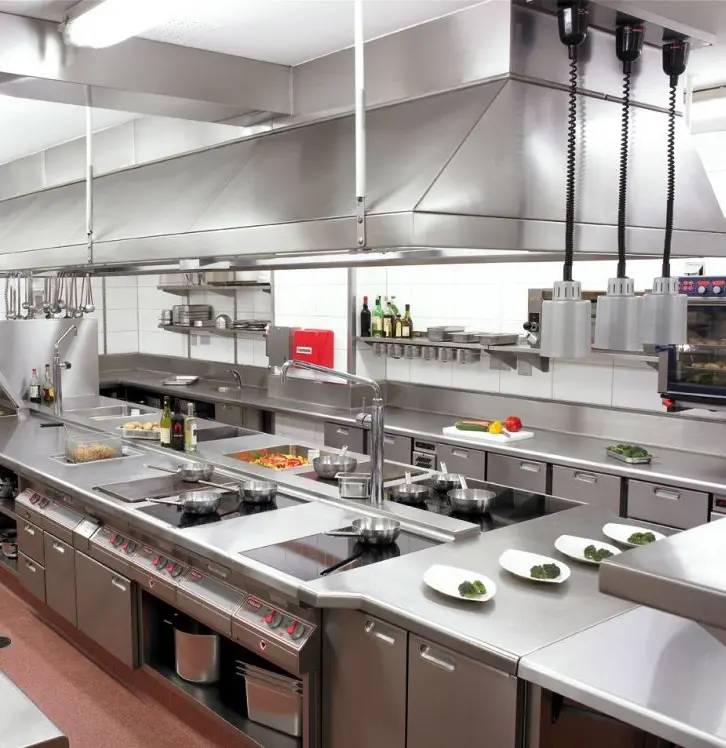
A kitchen hood fire suppression system is the single most critical fire safety investment for any commercial cooking operation. Whether you run a high-volume restaurant, cloud kitchen, hotel cafeteria, or industrial food court, the risk of a Class K fire (involving cooking oils and fats) is a constant threat.
Without a UL 300 compliant system, a minor grease flare-up can escalate into a catastrophic blaze in seconds, threatening lives, voiding insurance claims, and permanently shuttering your business.
Kitchen Hood Suppression is a highly effective fire suppression system that has been specifically designed to provide exceptional protection for a wide range of kitchen appliances, including stoves, ovens, and fryers. At Total Fire Protection, we understand the importance of providing flexible and comprehensive fire protection solutions for all of our clients, and that’s why we are proud to offer a diverse selection of Kitchen Hood Suppression Systems that are tailored to meet your unique needs and requirements.
Our team of experienced technicians is dedicated to providing exceptional service, from the initial installation to ongoing maintenance and support. We use only the highest quality components and equipment to ensure that your Kitchen Hood Suppression System is both reliable and effective. So if you’re looking for the best services for installing Kitchen Hood Suppression Systems, look no further than Total Fire Protection.
What Is a Kitchen Hood Fire Suppression System?
A kitchen hood fire suppression system (often referred to as a pre-engineered wet chemical system) is an automatic fire protection system designed specifically for the unique fire hazards of modern commercial cooking.
Unlike standard water sprinklers—which can dangerously spread grease fires—these systems use a specialized wet chemical agent (typically a potassium carbonate or acetate solution). When discharged, this agent targets the specific hazard zones: the fryer vats, griddle surfaces, plenum area, and exhaust ducts.
How Does a Kitchen Hood Fire Suppression System Work?
The kitchen hood fire suppression system operates on a simple, fail-safe mechanism designed to react faster than human staff can:
- Automatic Fire Detection: Fusible links (heat-sensitive alloy brackets) are installed inside the hood canopy and ductwork. These links are rated to melt at specific temperatures (e.g., 360°F or 450°F).
- System Activation: When a fire generates enough heat to sever a fusible link, the tension in the detection line releases, triggering the actuation cylinder.
- Suppression Discharge: The system forces the wet chemical agent through discharge nozzles located directly above the appliances.
- Saponification: Upon contact with burning oil, the chemical agent creates a thick, soapy foam blanket. This process, known as saponification, cuts off the fire’s oxygen supply and cools the grease to prevent re-ignition.
- Fuel Shutoff: Simultaneously, a mechanical gas valve or electrical relay trips, instantly cutting off the fuel supply to the burners to stop the heat source.
Key Components of a Compliant Kitchen Hood Fire Suppression System
To meet NFPA 17A and NFPA 96 standards, a complete kitchen hood fire suppression system must include:
- Control Head (Automan): The “brain” that monitors the detection line and triggers the release of wet chemicals.
- Wet Chemical Cylinder: The tank holding the liquid suppression agent (brands like Ansul R-102, Amerex KP, or Kidde are industry standards).
- Discharge Nozzles: Specifically aimed and flow-rated for each appliance type (e.g., dedicated nozzles for deep fat fryers vs. upright broilers).
- Manual Pull Station: A remote activation handle, usually located near an exit, allowing staff to trigger the system manually if they spot a fire early.
- Makeup Air & Exhaust Fan Interlock: The system must automatically shut down the makeup air supply while keeping the exhaust fan running to remove smoke.
Mandatory Compliance: Why You Need It
Installation is not optional; it is a regulatory requirement for any commercial kitchen producing grease-laden vapors.
- NFPA 96 Standard: The “Standard for Ventilation Control and Fire Protection of Commercial Cooking Operations” is the benchmark most fire marshals enforce.
- UL 300 Listing: Since 1994, all fire suppression systems protecting vegetable oil fryers must be UL 300 listed. Older “dry chemical” fire suppression systems are no longer compliant and often result in denied insurance claims.
- Insurance Requirements: Carriers will audit your fire suppression system’s maintenance records. A non-functional system is a major liability that can spike premiums or void coverage.
Kitchen Hood Fire Suppression System Maintenance
According to NFPA regulations, your kitchen hood fire suppression system requires a professional inspection and certification every 6 months. A certified technician will perform the following:
- Replace Fusible Links: These links stretch and weaken over time due to heat cycling and must be replaced semi-annually.
- Check Hydrostatic Test Dates: The chemical cylinders must undergo hydrostatic testing typically every 12 years to ensure structural integrity.
- Nozzle Inspection: ensuring blow-off caps are in place (to prevent grease clogging) and aiming points are correct.
- Line Flushing: Verifying that piping is clear of grease blockages.
A kitchen hood fire suppression system is more than just a code requirement—it is the heartbeat of your kitchen’s safety protocol. By understanding the mechanics of saponification, ensuring UL 300 compliance, and adhering to strict semi-annual maintenance schedules, you protect your staff and secure your business’s future.
Kitchen Hood Fire Suppression Systems by Total Fire Protection
Kitchen Hood Fire Suppression Systems by Total Fire Protection are designed to quickly detect and suppress fires caused by grease, oil, and high-temperature cooking equipment in commercial kitchens. Using advanced wet chemical agents, the system extinguishes flames, cools surfaces, and prevents re-ignition while automatically shutting off fuel or power to appliances. We provide systems ideal for restaurants, hotels, and industrial kitchens, our solutions comply with fire safety standards and ensure reliable, around-the-clock protection. Contact us today for a quote.
