
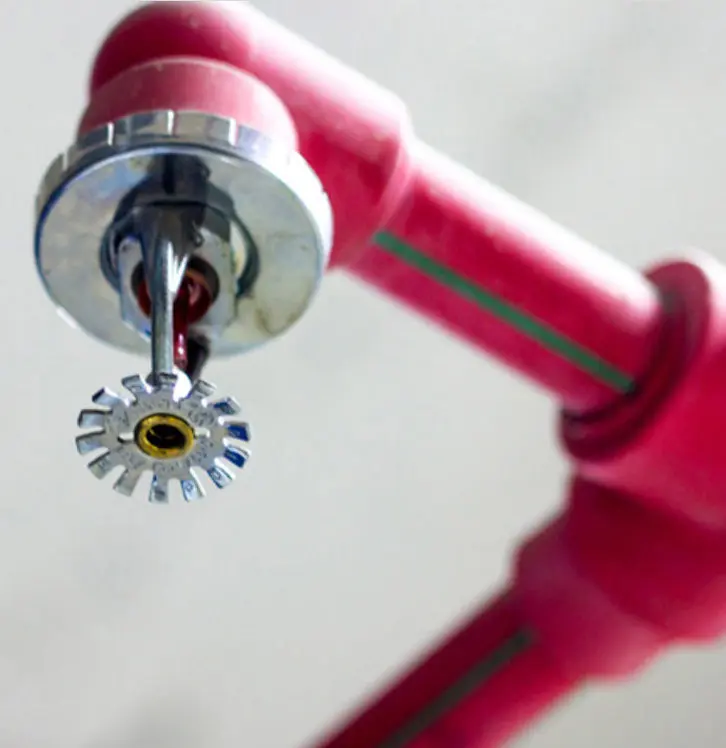
Fire sprinkler systems are the best way to stop fires from spreading fast when they first start. The National Fire Protection Association (NFPA) says that if you have sprinklers in your home or property, your chance of dying in a fire drops by 80%.
A fire sprinkler is the component of a fire suppression system are designed to discharge water when they detect the effects of a fire, which can be triggered by a predetermined temperature threshold being exceeded. What’s special about fire sprinkler systems is that they offer both fire detection and extinguishing properties in a single system.
This means that when a fire is detected in a particular area, only the sprinklers in that area will be activated, extinguishing the fire by dispensing water only where it is needed. Sprinkler systems not only help prevent property damage but also reduce smoke and dangerous substances that may be present in the event of a fire.
Even though fire sprinkler systems work well, many owners think they’re complicated or will get damaged easily. We will see how these sprinkler systems work on their own, the four main types of fire sprinkler systems you can get, and how to maintain them so your building follows the rules.
If you are located in the Doha, Qatar area, we offer a variety of different types and brands of fire sprinklers to meet your specific needs.
How Fire Sprinkler Systems work?
A common idea (from movies) is that smoke sets off fire sprinklers. That’s not true. Sprinklers turn on when they get hot, not when they sense smoke.
Each fire sprinkler has a glass bulb filled with a liquid or a metal part that melts. When a fire makes the ceiling hot enough (usually between 135°F and 165°F), the liquid grows and breaks the glass, or the metal melts. Then the water seal opens, and water sprays on the fire.
Fire sprinklers work by themselves, so only the sprinkler nearest the fire turns on. Most of the time, only one sprinkler is needed to stop the fire.
The 4 Main Types of Fire Sprinkler Systems
The right system for you depends on your building and what you need to protect.
1. Wet Pipe Sprinkler Systems
Wet pipe sprinkler systems are the most reliable kind of sprinkler system for businesses. The pipes always have water in them, so when a sprinkler turns on, water comes out right away.
Best suited for: Offices, schools, and homes where it’s always warmer than 40°F.
Pros: Cheap to install and doesn’t need much upkeep.
2. Dry Pipe Sprinkler Systems
In the dry pipe sprinkler system, the pipes have air or nitrogen in them instead of water. When a sprinkler opens, the air pressure goes down, a valve opens, and water flows into the pipes.
Best suited for: Warehouses, parking garages, or attics that aren’t heated and could get cold enough for the pipes to freeze and break.
Pros: Stops pipes from freezing and leaking.
3. Pre-Action Sprinkler Systems
Pre-Action sprinkler systems mix features of wet and dry systems to keep water from causing accidental damage. Water only comes out when two things happen: a fire alarm goes off (smoke detector) and the sprinkler head gets hot.
Best suited for: Data centers, museums, and libraries where water could ruin important things.
Pros: No chance of water accidentally spraying out if a sprinkler breaks.
4. Deluge Sprinkler Systems
Deluge systems have open sprinklers that don’t need to sense heat. When a separate fire alarm goes off, a valve opens and water sprays out of every sprinkler at the same time.
Best suited for: Chemical plants, airplane hangars, and factories with dangerous materials.
Pros: Quickly floods an area to stop fast-moving fires.
Fire Sprinkler System Maintenance and NFPA 25
To make sure sprinklers work when you need them, you have to check them regularly based on NFPA 25 rules. If you don’t maintain them, they might not work, and your insurance might not pay if there’s a fire.
Weekly/Monthly maintenance: Look at the gauges on dry/pre-action sprinkler systems to make sure the air pressure is normal. Check the control valves to make sure they’re open and not locked.
Quarterly maintenance: Check the water flow alarms and fire department connections (FDC).
Annual maintenance: A professional needs to check the pipes, hangers, and sprinkler heads carefully.
The 50-Year Rule: Standard sprinkler heads should be replaced or tested after 50 years to make sure they still work right.
Sprinkler System Installation by Total Fire Protection
Total Fire Protection specializes in the design, installation, testing, and commissioning of fire sprinkler systems that provide immediate and effective fire suppression. Our sprinkler systems are engineered to activate automatically at the early stage of a fire, controlling heat and flames to reduce risk to life and property.
All fire sprinkler system installations are carried out in strict compliance with Qatar Civil Defence (QCD) and applicable international standards. We use high-quality pipes, valves, fire pumps, and sprinkler heads to ensure reliable performance, long-term durability, and system integrity.
Our fire sprinkler systems are suitable for commercial buildings, industrial facilities, warehouses, residential projects, and high-rise developments, delivering dependable fire protection you can trust. Contact us for a quote today.
