
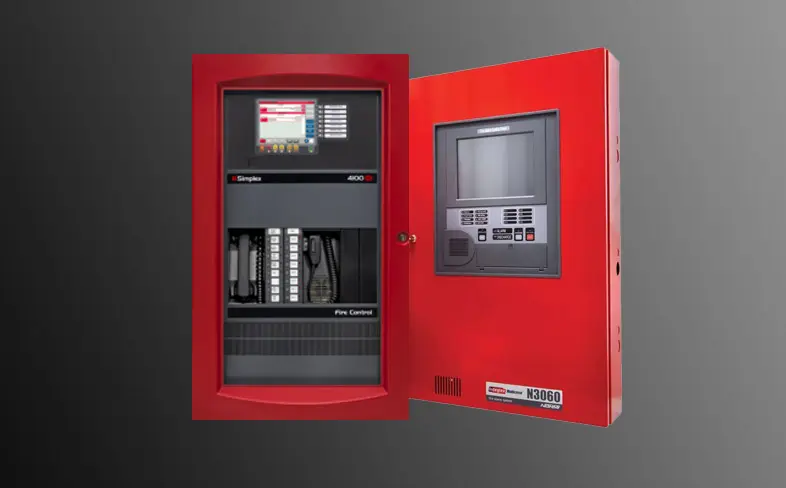
Addressable Fire Alarm System
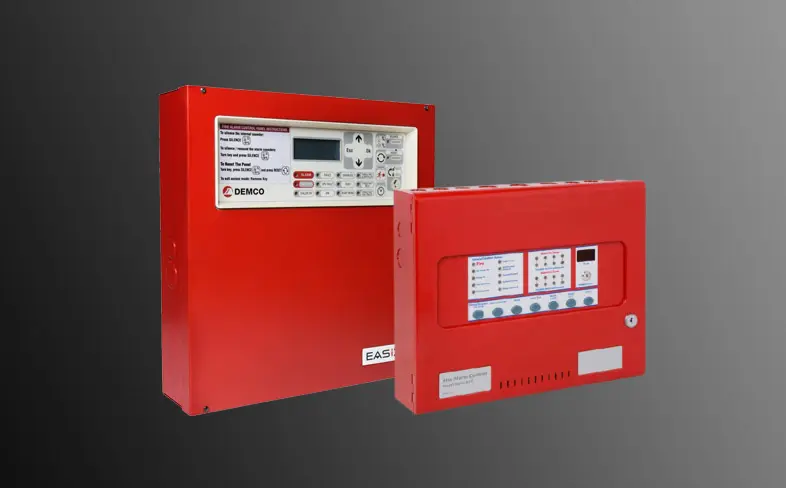
Conventional Fire Alarm System
What are fire detection systems?
Fire detection systems, commonly called fire alarm systems are fire safety devices that have been designed to detect the presence of an early phase of fire and to initiate automatic warning and controlling measures in a facility that is under the protection of a fire alarm system. These systems are also self-operating and remain operational when the typical building functions are not in operation hence form a fundamental part of active fire protection and life-safe design. The efficiency of fire detection systems will be determined by reliability, consistent use of detectors and the compliance with the existing technical standards.
Functional Intent and System Requirements of Fire Detection Systems
The main technical purpose of a fire detection system is to acknowledge fire signatures in the quickest practicable period and to transfer confirmed alarm notifications without undue delay and unwarranted activation. Performance of the fire detection system is compared with the following criteria: sensitivity of detection, response-time, fault-monitoring, system survivability and integration reliability. Fire security systems should not be shut down during power outages and under single-point failure cases using supervised circuits and standby supply systems.
Control and Indicating Equipment of Fire Detection System
The central processing platform of the fire detection system involves the fire alarm control and indicating equipment which aids as the central fire alarm control and indicating system. It constantly monitors detectors, operating manually, and output circuits as it renders programmed operational logic. When the panel receives alarm or fault inputs, signal processing is conducted based on definite algorithms and proper outputs are activated.
Advanced control units of fire detection systems envelop:
- Network architecture and distributed processing.
- Field wiring and devices involved in energy manufacturing under constant surveillance.
- Priority and event categorization.
- Built-in data logging and fault diagnostics.
- Redundant power and communication paths in large-scale fire detection systems.
These characteristics guarantee the continuity of operation and adherence to modern fire-safety standards.
Fire Detection devices and Fire Detection techniques
Fire detection devices in a fire detection system are selected depending on the fire-behavioral analysis, conditions of the environment, and nature of occupancy.
Smoke Detection
OMDs (optical smoke detector) is a type of smoke detector that measures the variation of light transmission or scattering to detect the presence of combustion aerosols and can thus be applied in situations with slow burning fires. The detectors based on ionization react to electrically charged particles of combustion, and react more rapidly to flames that develop rapidly. Aspirating fire detection systems continuously draw air samples at a pipe network to a centralized sensor so that early fire detection and graded alarming conditions of sensitive environments can be maintained.
Heat Detection
Heat sensors are activated in case of extreme temperatures. Fixed-temperature instruments have a fixed set point and rate-compensated and rate-of-rise instruments react to sudden changes in temperature. The devices are commonly used in the regions where the air pollutants interfere with the precision of the smoke detectors.
Flame Detection
Flame detectors analyse the set of specific ultraviolet or infrared radiation patterns emitted by open flames. These detectors are associated with high risk conditions in which rapid response is critical e.g. fuel storage or processing.
Manual Fire Alarm Systems
Manual fire alarm systems allow occupants or staff to activate a fire alarm without the feature of automatic fire detection. These devices are placed along exit points and they produce a prompt alarm signal when they are activated and not subject to verification delays. Introduction: Occupants ought to be provided with an escaped path to follow in case of an explosion or fire, and manifestations of an ignition source, e.g., light or heat.
Fire Alarm Signaling and the Notification of Occupants
Notification devices alert in audible and visual ways when one is walking through the space that is secured with a fire detection system. The system design should also make sure a high essential sound pressure level of alarm signals is met over that of ambient noise and they have sufficient visual coverage. Voice fire alarm systems are used in large or complicated buildings to provide intelligible instructions to individuals and to provide step-by-step response plans.
What are the types of Fire Alarm Systems?
Conventional Fire Alarm Systems
Zone-based or Conventional Fire Alarm Systems can group several devices together into shared circuits, to obtain information on the general location of alarms. They are typically restricted to buildings of low or small complexity.
Addressable Fire Alarm Systems
Addressable Fire Alarm systems use digital communication standards that are considered to provide each device with its distinctive identifier. This enables accurate event detection, advanced diagnostic capabilities of the fire alarm system and customizable cause and effect programming. Loop-based wiring designs improve system resilience by means of isolation and short circuit.
Wireless Fire Alarm Systems
Wireless fire alarm systems take advantage of radio-frequency signals to connect the field devices with the control panel. These systems require careful signal planning and periodic battery tests in addition to adhering to radio performance standards.
Fire Alarm System Interfaces and Functional Interaction
Fire alarm systems frequently interface with other life-safety and building systems to trigger inter-related emergency reactions. These can include release of fire suppression systems, activation of smoke management systems, elevator control and monitoring of building management systems. All interfaces should be fail-safe, monitored and in addition to that electrical and fire-safety specifications are to be met.
Verification, Testing and Maintenance of Fire Detection Systems
System commissioning includes thorough testing of detection equipment, manual controls, notification equipment and interconnected systems. Before a system is accepted, alarm logic and fault reporting are to be verified. Reliability of fire suppression systems is based on the periodic inspection, testing of sensitivity and the maintenance performed on the basis of the relevant standards.
Conclusion
Fire detection systems or fire alarm systems are complex, safety-critical systems, which require careful engineering, application of fire detection technologies, and strict maintenance. When planned and executed in line with accepted standards, they offer early warning, coordinated emergency management, and high level of fire protection of both occupants and building.
Fire Detection Systems and Fire Alarm Systems from Total Fire Protection
Total Fire Protection focuses on designing and delivering fire alarm and detection systems that are engineered for accurate early fire detection and reliable system performance. We as a fire protection company provide a full scope of services from system design and approved equipment selection to installation, commissioning, and maintenance, while adhering to all international standards and Qatar civil defence regulations. We provide conventional, addressable and wireless fire alarm systems for all types of environments be it large or small. For each fire detection system, we use only certified components and perform a complete testing and verification process so that we can guarantee reliable operation in normal and fault conditions. We provide system integrity and life-safety protection through our structured testing processes and technical support.
